

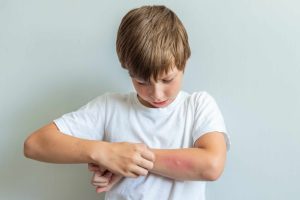
Insect bites are common in children, especially during warmer months. While most bites heal naturally within a few days, some can become infected and require medical attention.
In this blog, we will learn about how to recognise, treat, and prevent infected insect bites in children. Understanding these important steps will help parents act quickly and safely.
Understanding Insect Bite Infections
Children’s skin is delicate, and they often scratch itchy bites, which can easily break the skin and allow bacteria to enter, increasing the risk of infection and causing redness, swelling, or discomfort.
Now, it’s important to know why children are prone to infections and how to spot early warning signs.
Why Children Are More Susceptible
Young children tend to have more outdoor exposure and may not always resist scratching. Even a small mosquito or midge bite can become red, swollen, and sore if germs enter the wound.
Signs of an Infected Insect Bite
Watch for redness that spreads, increasing pain, swelling, warmth, or yellowish pus. A mild fever or swollen glands may also appear. If these symptoms develop, your child may need professional care for an insect bite infection.
How to Treat Infected Insect Bites
If you suspect infection, avoid squeezing or scratching the area and wash it gently with soap and water. Taking the right initial steps can help reduce irritation and prevent the infection from worsening, while knowing when to provide first aid or seek professional help is essential.
First Aid for Minor Insect Bites
Apply a cold compress to reduce swelling and use an over-the-counter bite cream to soothe irritation. Antihistamines may help with itching, but always follow a pharmacist’s guidance before giving any medication to your child.
When to Seek Professional Help
Seek advice if the bite looks worse after a few days, the area feels hot or painful, or your child has a fever. In some cases, antibiotics may be needed for infected mosquito bites or more serious reactions. Pharmacists can assess symptoms and provide suitable advice for treating insect bites under the Pharmacy First.
Preventing Future Insect Bites in Children
Once a bite has healed, taking simple precautions can help reduce the chances of it happening again, like:
- Dress children in long sleeves and protective clothing.
- Use child-safe insect repellent on exposed skin.
- Keep skin clean and avoid strongly scented lotions.
- Encourage children not to scratch bites.
Prevention is always better than cure when it comes to bug bites in children.
Insect Bite Treatment in Grimsby and Laceby
At Periville Pharmacy, we offer insect bite treatment in Grimsby as well as infected insect bite treatment in Laceby under the Pharmacy First scheme. Our experienced pharmacists can assess the bite, provide infection-relief treatment, and guide you with safe care at home.
Get Expert Help Today with Periville Pharmacy
If your child’s bite looks inflamed or painful, don’t wait. Periville Pharmacy provides expert insect bite treatment in Grimsby and Laceby under the Pharmacy First scheme; no GP appointment is needed. Visit us at your nearest branch or get in touch with our team today for professional advice and quick relief.
Frequently Asked Questions
Q1. How do I know if my child’s bite is infected?
If the area becomes more swollen, painful, or oozes fluid, it could be infected. Seek professional advice quickly.
Q2. Can pharmacists treat insect bite infections?
Yes. Pharmacists can assess mild infections and offer suitable treatment or refer you to a GP if necessary.
Q3. Should I apply ice or cream on an infected bite?
Use a clean, cold compress to reduce swelling. Only apply creams recommended by a pharmacist.
Q4. Are infected bites dangerous?
Most infections are mild, but untreated ones can spread. Always get advice if symptoms worsen.
Q5. How can I stop my child from scratching?
Keep their nails short and use distraction or soothing lotions to reduce itching.